Wednesday, January 20, 2016

Declaring Your Independence

When we talk about teenagers growing up and becoming independent, it usually refers to monetary independence or living on your own. But after a semester of college, I've found different kinds of independence that are important to develop during, or better yet, before you hit college.

1. Health and Self Maintenance Independence
This seems obvious, but between classes and work and social life and planning out your future, it's easy to forget to take care of yourself. Sleep and showers and food are important, people. Food has always been something I'm good to let go of. On my nineteenth birthday, I woke up sick for the first time that semester. After vomiting breakfast and lunch, I decided food was a bad idea, and didn't eat that day or the next. That's a legitimate reason for missing a day and a half of food, but I kept extending it. I ate eight meals in five days (including the ones that didn't stay in my stomach) before I got back on a normal food schedule. I wish I'd learned more about taking care of myself before I came to college.
Sometimes parent can be a barrier to self maintenance. At age three I was diagnosed with a hair loss condition called alopecia areata. This causes my hair to fall out in patches and grow back a few months later. Most girls I know were doing their own hair each day by late elementary school, but my mother wouldn't let me until I was eighteen. Once, in middle school, I ran off to catch the bus while she was still brushing my hair. I was called down to the office during homeroom. She was standing there with a hairbrush, ready to finish what she'd started. I could fix my own hair if it was Saturday and I intended to stay home, but that was it.
During my senior year, I started answering "Do you want me to do your hair?" with "I didn't ask you to, what makes you think I want it?" If my mom pointed out a hair flaw, such as a bald spot or bump I'd created by combing my hair to hide one, I'd refuse to fix it. I shut the bathroom door the morning of my graduation and, for the first time in my life, did my own hair for an event. I wish I would've started my hair independence quest long ago.
Me on the left
These are special circumstances and you'll have different ones. Every day I meet college boys who have yet to discover deodorant. I pass girls who don't have a lick of fashion sense. And yes, people can tell the difference between "I don't know how to dress myself" and "I was up until three last night and didn't have time to care how I look." Health problems, especially mental illness, becoming challenging in new ways when you're living on your own. Whatever is hard for you, learn to take care of it before you need to.

2. Ideological Independence
I took a government class in my last semester of high school. In the first week, we were assigned little strips of paper with issues on them and signed up for presentation dates. We were supposed to present the pros and cons of the issue, state our own views, and then moderate a discussion between our classmates. Usually that didn't happen. The presenter would mumble a few key facts from google and then perch in the teacher's chair while three of us debated: Liberal Girl, Conservative Boy, and yours truly.
Sometimes the brief presentation consisted of sentences starting with "My mom says..." or "My dad told me...". Once a boy stepped to the front and apologized. He wasn't able to put together a good presentation because "My parents are out of town."
All but a few of us turned eighteen over the course of the semester. Some voted at the beginning of the school year, we were all able to do so this year, and next year we'll pick a president. Young adults over the age of eighteen can't vote if they didn't have opinions as teenagers. I don't pretend to be a political expert. I care about issues more than candidates and really only understand a few issues in depth. But when it comes time to vote, I can vote for someone who feels the same about the issues that matter most to me.
When I'm troubled by an issue, I research and weigh it from both sides. Then I talk it out with people. I trust, usually my parents. I can't tell you how many times in high school my mom and I would sit on the couch arguing about the LGBT movement. We're both pro-traditional, but they were arguments nonetheless. We'd sit there for an hour jabbering about why we support what we support and whose reasoning was better. Liberal Girl told me once that I must be conservative because "that's just how you were raised." Wrong. I know she comes from a liberal family herself, but like me, she became socially conscious in middle school and started finding her own answers. You can't help if your views match up with your parents, but you can help whether you have views of your own or not.
This doesn't just apply to politics. If you are a person of faith, it's necessary to obtain your own testimony instead of relying on your parents. Know for yourself what is true and how those truths should govern your life, which brings me to number three.

3. Moral Independence
Back in my elementary school days, a DARE officer told us that if we were offered drugs, we should respond "No, dude, my mom would kill me." But that's only good so long as you're living in your parents' house. Even in high school it only half works. You and your friend both know you could keep drug use from your parents if you really wanted to. So you have to really want to.
You could try to invent a college equivalent of this excuse. "My RA would kill me." Now invent a curfew college equivalent too for when your date's pushing the limits. "My...building locks at midnight and I lost my ID card, so...I can't swipe myself in. Gotta go." But those excuses will only work while you're a freshman living in dorm housing."
The parental shield is handy if you want to avoid trouble without convincing your friends you're boring. And be a liar. What's the point of getting out of a morally compromising situation if you have to lie doing it? Figure out what your standards are and stand up for yourself.

4. Lifestyle Independence
When people ask where I'm from and the answer is Utah, lots of them follow up with "So do you go home a lot?" My answer is a flat no.
I live thirty eight minutes by freeway from my home base. Sometimes I have doctor appointments that can't be done at the student health center of local hospital. So when one of those comes up, I go home, but I don't make a day of it. I get on the freeway sometime between 11:00 and 1:00 at night. I say hello to my dog, pick up an outfit I left there last time, and sleep. At 8:00 AM I go to my appointment and I'm back at school just in time for my 11:00 o'clock class.
I went back to see a movie with a friend. My roommate paid for gas once so I'd take her to a party near my hometown. But other than that, I only meet up with my family for holiday breaks and big events.
One of my roommates last semester asked nearly every weekend if I was going home. I thought she'd catch on after a while, but she never did. Meanwhile she met up with her grandparents every Sunday for family dinner. All the out of staters have some sort of aunt or grandma nearby. What's the point of moving out if you're going to cling to your family?
If you live at a college close to home, people will treat you as if you're still around. The mother of one of my high school friends texted my mom, asking her to ask me to find a date for her daughter that weekend. I couldn't even find a date for myself when a friend asked me to double with her over winter break. A different friend, my unofficial self-appointed mentee from our church youth group, asked me to join her for their annual ice skating activity. I had to explain to her that I couldn't just show up to youth group events when I wasn't a part of it anymore. You have to build a whole new life for your self. Living half in one and half in another won't cut it.

5. Social Independence
My friend Jessi thought it would be a good idea to room with a high school friend. That way she wouldn't have to deal with the craziness that comes from living with a random stranger. This friend had a boyfriend who was off serving an LDS mission for two years. Before he left, she wrote in his journal that she would marry him as soon as he got home. Then she began dating a boy she found at college. Things escalated quickly. One night she disappeared. When she came back, Jessi discovered her roommate had taken a road trip to Vegas and eloped at a drive thru chapel. Instead of emailing her ex-boyfriend to let him know she was taken, she let him keep thinking he could come home to her for several weeks post-wedding. Eventually Jessi had to Dear John him for her.
This is an extreme example, but just because someone was a good friend to you in high school doesn't mean you can count on them once you hit college. My graduating class was six hundred and twenty five. One semester later, I'm only in contact with two of them. You need to learn how to make new friends.
I'm in on-campus dorm housing and have to take nearly all my meals in the cafeteria. After one week, I was disgusted by all the people choosing to sit alone. Not because they were sitting alone, but because I'd go to weekly hall meetings and church meetings to hear them talking about the struggles of being alone. If you sit in the back corner table of the cafeteria behind the partition, you are asking to be alone. That's fine if you're the solitary type, but don't do that to yourself and whine about it at the end of the week.
Sometimes I go to the cafeteria with people. Usually I'm alone. Unless I'm in a hurry, in the middle of a crisis, or so sick that I can't talk, I sit with a random person every meal. If they get up and leave, I find a new friend. Sometimes I eat with four single-table people over the course of one meal. This way I meet at least three new people a day. Some become friends and I'll seek them out again. Most give me the companionship I need for the space of one meal, then they're gone forever. On the rare days when I chose to eat alone, I have never been approached by someone trying to make a friend. I think you're justified in feeling lonely then, when you reach out constantly and no one reaches back, but don't complain when you're bringing it on yourself. You are responsible for your own social life.

Independence is a multifaceted achievement. Learning to take care of and stand up for yourself is more important than supporting yourself by far. College will throw you into alien situations and you have to build up a new skill set to deal with them. 

Wednesday, January 6, 2016

College and Complaint Culture

For the first month of college, I was sure American Heritage class would be the death of me, and I wasn't even taking it. Everywhere I went, people were complaining about it. When I told somebody "I'm stressed about a test on Friday" or "I have to go write a paper", they would automatically assume it was for American Heritage. Never mind that our school offers a few thousand others courses. If my test stress or assignments coordinated with their American Heritage schedule, they'd assume I was in the class too.
There's required, and then there's required. Most general education requirements give you a lengthy dropdown list. "You need a civilzations course? Okay take philosophy or music or theater or art history or or or-" but American Heritage only gives you American Heritage. There are a few ways to get out of it. My New Zealand born, U.S. permanent resident roommate told me she planned on putting it off as long as possible and would try to make the multicultural student center acknowledge her as an international student so she could take an easier course. But most of us don't have a hope.
For a long time, I assumed American Heritage must be some monstrous class. Then I realized the real reason everyone complains about it: everyone's taking it!
This means:
1. I'm statistically more likely to run into a student who complains about American Heritage than any other class, say, Survey of Judaism and Islam.
2. Misery loves company. People are more comfortable commiserating when they know everyone around them has the same problem.
3. Since there's no decision making involved, lots of freshmen take it their first semester, especially the ones who didn't decide on a major while still in high school. Living in freshman housing, I experienced the brunt of it.
My first day of American Heritage is Monday. I've decided not to complain about it anymore than my other classes. Just because I'm going to college doesn't mean I have to be part of collegiate complain culture.
I recently downloaded Yik Yak, an app similar to Whisper, which college students occasionally use to make witty insights about student life, but mostly complain about homework and talk about sex. I was disappointed. I discovered Yik Yak through their facebook page, where the wittiest responses from colleges all over the world were reposted so people outside the OP's radius could enjoy them. Once I had the app, it was all things I didn't need to hear.
When I was fifteen, I did a community theater production of Cinderella. Some kind of backstage drama put me in a mood during rehearsals one day, so I went and hid behind a ladder to sulk. Allan, my eleven year old castmate, found me there. "What are you doing?" he asked.
Since he was willing to listen, I spewed this rant about hating everyone and everything about the play. He sat through it. Then, the instant I was done, he asked me honestly, "Then why did you audition?"
That got me thinking. I could quit. I knew a few people who'd done so. But I was already there, and I'd come there because I knew there were things about the show I'd enjoy. The production hadn't taken some drastic turn that would stop me from enjoying them. It was simply everyday stress and drama. So I crawled out of my ladder corner and rejoined the cast.
Four years later, I can't remember what sent me behind the ladder, but I remember Allan's question. I remember that it was a question, not unsolicited advice. He was honestly bewildered at why I'd choose to do something I hated.
You can choose to not do something you'll hate, or you can choose to not hate something you do. It's hard. Life is hard. During finals week, I decided to stop complaining about finals, but that was the only topic of conversation and there's no positive way to spin it. I had my complaints during my first semester, and I'm sure there will be more this coming term, but I think there will be a lot less. I've snapped to certain realizations.
I have friends who aren't in college. Some lack the money, some the motivation, some have pressing mental health problems, and some are simply doing other things with their lives at the moment. But all of them chose not to go. And that reminds me why I chose the opposite.
Not for the dating scene. Not to move out of my parents' house. Not even to get a degree that would lead me to a higher paying job. I came to college because I wanted to learn.
Before I left for college, a neighborhood woman told me, "Everyone should be able to go to college three times. Once for all the classes you need to take, once for all the fun classes, and once for all the club and social activities." I thought that was crazy. Why stay any longer than you have to? Why lust after the whole buffet when sampling a few from each tray will fill you up just fine?
But now I get what she was talking about. I spend at least an hour or two each week pouring over the course schedule looking at what I could take. Instead of doodles, my notebook margins are full of dozens of versions of my four year plan. I want to take political science, child development, archaeology-but all those are out because I'm already doing psychology. There's a nutrition class? Why didn't I discover that before I took plant science for my biology credit? Just one arts class? Really? Why am I using my high school AP credit when I could've had excuse to take women's studies or World War II? Honestly, I don't know why everybody talks about their generals as a burden. I'm kind of pissed off that I need to have a major.
I'm here for four years. Well, unless I use the Speed Student version of my four year plan I cooked up in the margins of my physics notebook. Oh, did I mention there's an entire physics class around time? I might as well enjoy those four years while I have them.
Last month, my cousin Melissa, who is graduated, married, and the mother of two children, invited me down for dinner and a girls' night. While we were trying to decide what to do, she suggested going to a lecture at her city's art museum. I was surprised and a little weirded out. Go to a lecture? For fun? I'd been going to lectures all day. That's when it really hit me how valuable learning is to someone who's no longer in that stage of life.
To all my teen reader friends who are considering going to college, do it. If it is at all possible with your financial situations and compatible with your life circumstances, go. You won't regret it.
Yes, I have hard days, but I could have hard days anywhere. Different types of hard days, but hard days still. I chose to have them here.
So I'm going to enjoy school while I have the chance. 

Friday, December 11, 2015

Life's Too Short

As I mentioned in a previous post, I'll be taking a hiatus from school, Internet, and life in general to serve as a missionary for my church for eighteen months. I won't leave until summer, and my application can't be sent in until one hundred and twenty days before my eligibility date, so I didn't start the application process until this week.
I have plenty of other friends who have, are, or are planning to go on missions. For years I've heard them say "I'm working on my papers" or "I just finished my papers". Whenever I tell people about my mission plans, even people in my church and age range who are fully aware of the 120 day rule, they ask, "Have you started your papers yet?"
So I always assumed the paperwork was this long, nasty, rigorous application. Even when my roommate Sabrina managed to get everything done in a single week. I thought she was just hyperproductive. After a quick interview with my bishop, I sauntered off to a science class review and thought, "I'll take care of all that nasty, rigorous paperwork over winter break."
As it turned out, I didn't need most of the information in the review, so I pulled up the website and filled them out on my phone. And then it was done. All this time anticipating the dreaded paperwork process, and I did it in under two hours between jotting down notes about ecosystems. I still have a few interviews and doctors appointment before I'm good to go, but so far as papers go, I'm done.
Yesterday I was getting ready in the bathroom with Sabrina and we got to talking about where we'll be in eighteen months. She's leaving earlier than I am, so she'll be twenty and a half when she returns, and I'll be twenty one. It seems like such a big chunk of life. Then she point out, "A year and a half ago, I was getting ready to start my senior year of high school."
That's so bizarre to think about. Everything from my fall semester of senior year still feels like recent developments. All the bad things are still raw wounds, all my epiphanies new revelations. I always rolled my eyes at the phrase "Life's too Short". It's the longest thing you'll ever do, people. But maybe there is some truth to that after all.
Life's too short to live without people who love you.
Life's too short not to have fun.
Life's too short to be stuck in a job you hate.
Life's too short not to learn every fascinating thing you can.
Life's too short to pursue other people's expectations instead of the dreams you've set for yourself.
Life's too short not to help other people.
Life's too short not to enjoy it.
High school is too short. Four years for most people-three for me-and yet it's such a defining and memorable stretch of your life. Same with college. Maybe it's because school is the only time you'll be doing the same thing as everyone in your age bracket. Maybe it's because pivotal moments come when you're young, so this would be a critical time in our lives no matter what we're doing.
Whatever the case, I've got approximately six months to live before I go to Texas or Tahiti or wherever it is I'm called, and that's too short of a time for me to not live it up. 

Thursday, November 19, 2015

That Day I Met Ruby Bridges

It's not every day that I get to meet one of my heroes.
Back in September, the mother of one of my African American friends wrote on Facebook that Ruby Bridges would be coming to speak at BYU in November. I've loved learning about the Civil Rights movement ever since I read We Were There Too!: Young People in U.S. History back in eighth grade, which is also the year I started blogging about age. My first period was history and I got in early a lot, so I'd flip through the book to pass the time. It had over nine hundred pages and only eight of them mentioned a teenager or child. At the end of each chapter was what I called the "minority half page", where they'd mention what women or racial minorities had been doing during that particular span of history.
So I went to the library and found myself a better history book. I tracked down We Were There Too on my own, but I later realized my history teacher had a copy on his shelf, right next to a book about Ruby Bridges. When he found out I was interested in minority histories he offered to loan me the first and I took the second.                    
So I marked the date of Ruby's speech in my planner and for the next few months I ran around campus telling my white friends, "Guys! Ruby Bridges is coming in November!"
And then my white friends said, "Cool. Who's that?"
Lots of people know the story once you start talking but she doesn't have name recognition.
Fast forward to today, when my friend Edie and I stood in the Line of Doom outside the art museum to get wristbands. College tip: Just because all your friends on campus don't know who a speaker is doesn't mean every white parent of an adopted black child within a twenty mile radius doesn't know. It doesn't mean that every fifth grader who did a report on Ruby Bridges doesn't know. It doesn't matter that every black law school student who already met her in fourth grade doesn't know. And they'll camp out in front of the museum. So show up early.
I hadn't thought to bring homework, so we passed the time watching people in the crowd. Especially the kids. When I was little, I had a lot of "day friends"-kids I met at the park or pool and never saw again. I've started using the term again in college to describe people I meet for a half hour in the cafeteria. I watched day friends from every ethnicity climb fences and cartwheel across the grass. Kids don't judge, I thought. Anyone your size is a good friend.
Me and Edie waiting in the Line of Doom. And we're happy about it. 
Displaying IMG_2831.JPG
Ruby talked a lot about friends. She was six years old when the NAACP asked her parents to let their child help integrate the first desegregated school of Louisiana. She was one of over one hundred and forty volunteers, but "the opposition", as she called them, insisted all the candidates take a test. Six girls, including Ruby, passed. They were split up. Three went to one elementary school and Ruby was supposed to have two friends, but their parents pulled them from the program out of fear.
Nobody really bothered to explain to a six year old what was going on. All her neighbors were strangely excited for her first day of class and kept saying "She passed the test!" So Ruby thought she'd tested out of twelve grades and was headed straight to college. That would explain why the building was so much bigger and nicer. And maybe it explained why she sat in class all alone with Mrs. Henry. She knew there were other children in the school (five of them, the rest had been pulled out) because she could smell food cooking in the cafeteria. It wasn't for her-she had to pack her own lunch in case of poison. Sometimes, if she stood in the coat closet, she could hear children's voices on the other side.
White students walking into Ruby's school. Images taken from her book Through My Eyes.
After many arguments with the principal, Mrs. Henry got permission to move the cabinet that blocked the coat closet's connecting door. Ruby stepped over to the other side. All the kids were white. She said. "It never crossed my mind what the kids would look like-I just wanted to make friends." She asked a boy if he would play with her. "My parents won't let me," he said. "Because you're a nigger."
At this point, a young white girl named Rebecca sitting on our row whispered, "Mom, what's 'nigger'?" Her mom explained. I'd asked Rebecca before the talk if she knew who Ruby Bridges was, and if she'd learned about her in school. I'd always thought Ruby Bridges was a Black History Month staple and every elementary school child should be able to name her alongside Martin Luther King and Rosa Parks. But apparently some of my college friends never learned about her or didn't remember. So I wanted to ask a kid. Rebecca said she'd learned about her "a little bit" in school but most of her knowledge came from a book.
Ruby has multiple books, but if it's the most popular one, the one I'm holding in my lap as I type, it contains that hateful word. And Rebecca stared at this Norman Rockwell painting for a solid hour before Ruby spoke.

But she'd skimmed over the word to read the story and looked past the graffiti to see the girl.
Ruby said she didn't blame the boy for his refusal. If her parents had told her not to play with a kid-Asian, Hispanic, mixed race, white-she would have obeyed. That's what kids do. That's the moment she finally realized she wasn't in college. That it was all about her. The angry mob chanting racist slogans and hoisting a coffin with a black baby doll didn't clue her in. A child did.
Protesters outside Ruby's school. I really hope that girl is smiling because there's a camera and not because her family has her holding a Klan cross. 
Ruby now travels and speaks to schools, from colleges like ours to elementary schools. She shared stories of all the children she's met, how the schools today have progressed so far, and one quote of hers stayed with me: "Racism is a grown up disease. Let's stop using our kids to spread it."
Tonight I got to shake her hand, get a book signed, babble about how she'd been one of my heroes since eighth grade, and then a museum official let me step behind the table to hug her.
It shouldn't fall to children to correct the errors of our parents. But it does. Children are the only ones of us who are truly unbiased. When I was nine, I went to a family reunion that was crashed by two black girls who lived near the park. The ate our food and played our games, so I thought I had two new cousins. More then half of the adopted kids in my neighborhood were black. Their race didn't clue me in. My mom had to explain they weren't related.
Ruby wasn't the first child to desegregate a school. She wasn't the only one in her city. But she stands as a symbol of a generation and a movement. It's partly because of her perseverance that Edie and I can go to the same school.
Childhood is the best time to learn anything, including racial tolerance. Not just to be taught but to learn. A white fifth grade girl in the row behind me said that like Rebecca, she'd learned a little bit about Ruby in school, then she'd gone and read all her books. In her talk Ruby described a school visit where she met a girl who hadn't learned the term "biggest fan" yet. "I've been your very best friend since I met you on the book", she told her.
I think adults have a responsibility to educate the rising generation. But adults have a responsibility to do many things for children, and topics fall aside. Even if you cover racial tolerance you'll be missing something else. I believe we're also responsible for our own education. Your teen years and college years are just as good of a time to find heroes. If I hadn't hit up the library for a more inclusive history book in eighth grade, I wouldn't have become passionate about teen and minority history. I wouldn't be blogging about it today. Ruby Bridges wouldn't have signed my book today.
But she did, and I plan on using it to teach my children.

Wednesday, November 11, 2015

Nineteen and Counting

Note: Post written on November 10th but not published until the following day, because complications.

It's here.
Nineteen is never a number I looked forward too. I knew I'd have high school years, and they'd end at eighteen, and after that would come my twenties. Now I just look at this number and think, "What am I supposed to do with you?" The more I think about it, the more I'm sure I'd rather stay eighteen for the rest of my life. The last year has been rough socially and emotionally, but I like the number. I like the technicalities of being an adult while still having one foot in the teen world. After eighteen there's really nothing to shoot for. Maybe I'll just be transaged.
"Ma'am, how old are you?" "I'm a transaged individual identifying as eighteen." "Uh huh, cause you look eighty four."
Birthdays hit me hard. I haven't wanted one since fifteen because for some reason I saw sixteen as the great dividing number. I keep thinking I'll stop celebrating them as a sign of personal protest, but I keep doing it as an excuse to gather my friends together. My school friends in high school were pathetic layabouts and my birthday was one of the few times a year I could get them to plan a social activity. But I've got a better crowd now. That's one of the things I love about college. Everyone's always looking for a party. Just spread the word and offer food.
Which is fabulous if you're capable of eating food. I made grand plans to take my friends out for Indian food, and later invite dozens of people for brownies, but my stomach had other ideas. In addition to all this stuff:

My roommates gave me stomach flu. Diagnosis pending, but I'm pretty sure I have what they had.
So for the first time in nineteen years I am sick on my birthday.
One of my friends put "Wish Erica Smith a happy birthday" signs all around the building. Which is pretty useful when the chocolate pineapple delivery guy wants to know where you live. I've got so much junk food strewn about my room and all I can put in my body is ginger ale and crackers. Other than answering the door, I've spent my entire evening laying in bed, watching either TV or the backs of my eyelids.
Nineteen isn't a threshold birthday like eighteen. I'm a non smoker so there's nothing for me to do. The only other threshold I'm aware of for nineteen is it's the minimum age for a girl to be an LDS missionary. My first friend has already left and I've got a few more on the way. But I don't plan on leaving until after winter semester so I've got time to kill. Girls serve for eighteen months, and with my timing, I'll miss two birthdays. Mother's Day and Christmas are the only holidays where we get to call/skype home. 70% of missions are served outside the US, so this is definitely the last birthday I'll get to talk with my family and quite possibly the last one I spend in the country for the next three years.
And I spent it sleeping and vomiting.
That, combined with the fact that I was having another birthday in the first place, put me in a bad mood. I broke down crying while listening to 100 Years to Live, one of the age progression songs I grew obsessed with my sixteenth year. 
But today also reminded me why we have birthdays. Not to celebrate being "ex-bodymates with your mom", as one of my well wishers put it, but to celebrate being alive in a world of other people. So many people came through for me today. My only healthy roommate gave me a hug and let me cry on her shoulder, my extended family called me up, and, thanks to the advertisements, I had complete strangers walking up to me and wishing me a happy birthday.
I'm a big believer in our best days being the "up and down" ones. Maybe today wasn't the party I wanted, maybe I won't get a good, traditional birthday until I'm twenty two, but I had friends today. And I'm grateful for that.
Now for the question I ponder with as every chronological and school year comes to a close. Am I still young, and how long will I keep up my blog? Right now the answers are yes and yes. Nineteen is still a teenager. I'm still passionate about youth and fiery when it comes to ageism. so until I'm shipped off to Tennessee or Thailand for my mission, you'll keep hearing from me.
And at that point I'll probably start a mission blog because writing is a really hard habit to break.
Here's to one more year.

Also, last year on my birthday I blogged about my Growing Up Girl dolls. My grandma started giving them to me consistently at age five, so for the last few years, she's been filling in the years she missed. Here's the complete set.


Monday, November 2, 2015

Gianna Jessen: Teen Abortion Survivor


In the wake of the Planned Parenthood expose videos, I've been doing a lot of research on abortion. I've consulted both pro life and pro choice sources, not because I think it's important to balance out opinions, but so I can get all the facts. Pro life sources tell me the stories pro choicers won't. But pro lifers focus on the morality of the issue and I need to know the medical details. So I consulted Planned Parenthood, health sites, and testimonies of maternal abortion survivors for that.

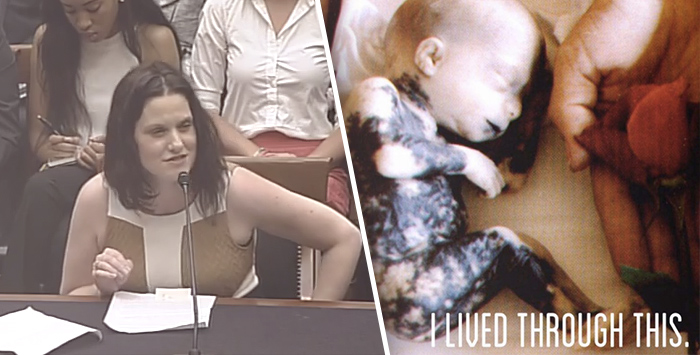
I also discovered another kind of abortion survivor and read her biography. Gianna Jessen's birth mother, Tina, became pregnant at seventeen. She knew about the pregnancy early on and planned on carrying her full term. But at an appointment with Planned Parenthood, Tina was told she shouldn't try to raise a baby while living her mother, who was on welfare, and she didn't have the means to support herself. This was seven and a half months into her pregnancy. For perspective, I was born at eight. Her local Planned Parenthood wouldn't perform an abortion that late in the game, so they referred her to a clinic that could.
It has a haphazard, chop shop kind of place. After injecting a saline solution into Tina's womb, which was intended to choke and burn Gianna, the doctor went home. The nurse on duty fell asleep at her desk. When Tina came to fetch her after her water broke, she said "Okay" and put her head back on her pillow. So on April 5, 1977, Tina delivered her child alone.
Gianna during a recent congressional heading and an image of a saline birth used as a visual aide


Gianna's body should've been charred and mottled by the saline at this point. But by some miracle, she not only lived, but did so with minimal scarring. She does have cerebral palsy as a result of the solution cutting off oxygen to her brain. But it's less severe than many cases. After intense physical therapy and several surgeries, Gianna can walk unaided and played softball in her early teens. She stopped because at age fourteen, she began traveling the country, speaking and singing at benefit dinners, rallies, and debates.
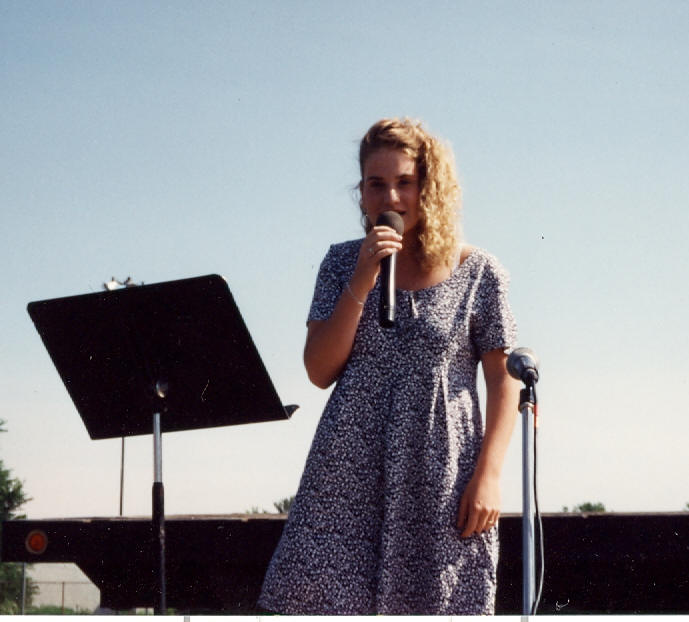
Gianna performing at a Right to Life rally at age sixteen
At first she preached to the choir. What prolife organization wouldn't want a living, breathing witness standing in front of them? But before a year passed she accepted calls to speak on panels where she stood alone. She endured ridicule, booing, bullying, media skepticism, and was arrested multiple times for peacefully protesting at clinics around the country. As a teenager she was accused of being her adoptive mother's prop, although she usually spoke and performed alone, and her mother was accused of exploiting her for the prolife cause. In fact, Diana DePaul traveled around giving prolife talks before she ever adopted Gianna, and her daughter didn't know her birth story until age twelve. Diana's own activism gave her an idea of what Gianna might face some day. She encouraged her to adopt her stage name (Jessen) in middle school to keep her personal separate and avoid harassment. It hasn't worked, I follow her on twitter and see her fending off people who wish her dead daily. I've received such a retort myself when I sent an ill-worded tweet that made it sound like I didn't think she had a right to live.
I do. I've known for a while that babies have survived abortions. At fourteen I heard the story of Ana Rosa  Rodriguez, who made it out of the womb mostly intact, in casual conversations with a girl who'd recently graduated high school.

When I began researching abortion, I kept running into stories about Ana, Gianna, and a handful of other prominent survivors. I saw the same names so often I thought they were the only ones in existence. But after reading Gianna's story, I learned there's an Abortion Survivors Network that serves an estimated 44,000 former aborted babies living in the United States. A tiny handful, like Gianna, have made abortion their crusade and travel the world sharing their stories. Most are hair stylists and lawyers and homemakers and teachers quietly living their lives.
Many have disabilities and medical issues caused by the abortions. And many do not. A good number of survivors are twins. If you want to survive an abortion, it helps to have a brother or sister sitting in front of you.
Abortions done as late as Gianna's are generally frowned upon. I've only found one clinic in the country that advertises procedures past twenty six weeks. But under Roe v Wade, states can't forbid a woman from an abortion at any point in her pregnancy if she decides it's problematic to her health. So what's health? According to Doe v Bolton, a Supreme Court companion case decided the same day as Roe, health includes "all factors-physical, emotional, psychological, familial and the woman's age."
If I found myself pregnant several months from now, I could justify an abortion just because I'm unmarried and think I'm young. No actual health problems required.
I've been blogging about ageism since eighth grade, almost five years now. In all that time, I can't think of a single topic I've covered that showcases more blatant prejudice and discrimination. Abortion is the ultimate example of ageism. At no other time in an American citizen's life can the fourteenth amendment consider you a nonperson. At no other time will your age matter so much that the laws dice it down to weeks. At no other time is your status as a minor such a strike against you.
I can understand the pro choice mindset. I'm not entirely sure when a lost pregnancy is the death of a soul. But even if you don't believe life begins until some certain moment, you can't deny that Gianna is alive and human today. You can't deny that she wouldn't have been so if the saline succeeded. Isn't abortion murder because it cuts off a life that would and could have been?
There are more abortion survivors living today than we care to admit. But not all them get the chance to live. ANS founder Melissa Ohden, who testified with Gianna before the House of Representatives, spoke on how she could've been drowned in a bucket of formaldehyde. But she didn't. And no matter how inconvenient her existence may be to pro choicers, she's here today.

Gianna: Aborted, And Lived to Tell About It, was first published in 1995, and she was seventeen at the time it was written. Beyond a few chapters dealing with her birth and adoption, it's entirely focused on her activism as a teenager. I was the same age as Gianna when I started caring about world issues in general and ageism in particular. But while I simply turned to blogging she became an activist. I'm glad that the world has teenagers strong, determined, and passionate enough to make a difference in the world.
Especially when they're fighting for fellow children. 

Monday, October 19, 2015

Keeping the Stars in Your Eyes


Last week was homecoming. In addition to the football game and other day activities, we had a parade circling around campus. I've always loved pomp and circumstance, and you can't ask for much more of that than a parade, so I wandered around for a good half hour before I finally found a good place to watch. I could hear the echoes of bag pipes and tubas, but I couldn't figure out where they were. I didn't dare ask anybody for directions in case wanting to see the parade turned out to be another cute little freshman desire. Maybe the reason I couldn't find anybody else looking for it was because nobody cared.
At last, I found a spot at sat down beside some other girls to watch the parade go by. After a while I thought, "Really, this isn't something spectacular. Cars with banners. T-shirted club members with bags of taffy. Teenage girls in lots of makeup waving from streamered platforms moving down the road." Parades quit being fun when you strip them down to their parts instead of the sum.
But then, so does everything.
Halfway through our poetry unit, my English professor joked that poets in general Emily Dickinson in particular must have had what she called "low wonder thresholds." Emily probably walked downstairs in the morning, gasped, "BREAKFAST!" And ran back to her room with enough inspiration for a month. How else could she wax poetic about such simple things for so long?

The most valuable thing children have is wonder. We lose that as we get older. Partly because the shininess of the world wears off the longer we live in it. We've seen enough sunrises, what's one more? A miracle? Sunrise just means breakfast, breakfast just means getting ready for the day, getting ready for the day, getting ready for the day just means leaving home, leaving home just means eight hours until you get to come back.
In my non-GE classes, I hear older students moan about how college is hard and it's getting old and could they just graduate already and what to do after graduation and life is haaaaaaard. They've lost the stars. But I'm determined to keep them for as long as possible.
A few days ago I went to the cafeteria for breakfast and got hash browns, yummy runny eggs, and an English muffin, all on the same plate! I sat down by some stranger. He asked "How are you", but instead of answering back with a "Fine", I told him how excited I was for my breakfast. Because I honestly was. I've checked the university app every day since to see when that meal will come around again. I've gone to lectures and club events and campus activities just because they sound fun. I'm still marveling at all the ways college is different from high school. The library has a 3D printer and I can make anything I want! My civ classroom has a back section that rotates like a merry go round! I could take a class in floral design or glass staining or Scandinavian cinema!
I know I'll get a college callous eventually, just like I did for high school and middle school before that, but I'm trying to prolong it. There's still joy to be found in eggs and parades. I don't think poets are born with low wonder thresholds, I think it's a matter of training. You can choose to retain a childlike sense of wonder even as you mature.
I have to believe that. After all, what fun is life if you can't live it with stars in your eyes?