Friday, October 12, 2012

Forever Young? Not Quite.

What's wrong with this picture?
This is Brooke Greenberg. She's sixteen in this picture, nineteen now. She and her younger sister Carly live in Maryland with their parents, where Brooke enjoys watching TV and shopping.
Oh, and she's the one on the left. Carly's the thirteen year old holding her.
Confused? So is the medical world.
Her hair and fingernails grow like everyone else's, but she has the bone structure of a ten year old, baby teeth like a first grader, and her brain hasn't developed any more than the average baby. She didn't seem too different from the average baby at birth, aside from being born one month early by C-section. She was somewhat underweight, four pounds and one ounce, but I weighed less than that and I'm a normal teenager. Brooke had seven stomach ulcers, a seizure, and a stroke all before the age of four. When she had a brain tumor, her parents bought a casket. But Brooke survived.
Now she's 16 pounds and stands at 2' 6" (76.2 cm). She goes to a special needs school, pushing a miniature walker through the halls. Her mom takes her around the mall in a stroller. Other moms with their toddlers ask how old she is. How do you explain that to a casual stranger? Ms. Greenberg divides her age by twelve. The other mother's accept her age as nineteen months and go on with their lives.
Some scientists see Brooke as a fountain of youth and want to run tests. But really, would you want to be that young forever? I've heard too many parents lamenting about how their children have to grow up. Can't stay innocent and oblivious forever. And I've heard a lot of teenagers wish for the same thing. You never realize just how good your childhood is until you lose it.
But even though Brooke won't be going out to wild parties with stupid boys, even though she'll never have to stress her way through college and pay her own bills, she'll never be able to fully appreciate her youth either.
Maybe growing up isn't such a bad thing after all. 

Tuesday, October 9, 2012

Banned? Don't Bother.


It's the kind of thing that only really happens in New York. Every day before school, teenagers line up and wait for a van parked on the street corner to take their phones and iPods. They pay, go through the school day, and return in the afternoon to reclaim their electronics.
It costs a dollar a day-$180 over the school year-ingenious on the valet's part. Convenient on the teenager's part. Unless you're one of the two hundred students who lost their phones when a van was held up.
Now, why don't they simply set them on silent and shove them in their backpacks? That's what I do. But then, my school doesn't have metal detectors. They're meant to guard against students bringing weapons to school, but phones and iPods also show up. So why not confiscate them while they're at it?
Cell phones are an issue. Everybody's heard that before. Cyberbullying, inappropriate pictures, but you can do those from your own bedroom if you're that type of person. Really, the only problems they present uniquely to school are distraction and cheating. But so long as there are friends to talk with, paper to doodle on, books to read, and windows to stare out, banning phones won't perfect anything.
I take my phone to school everyday. It's a lifesaver whenever a leave an important folder at home. Or when I leave an unnecessary folder at home and my mom wonders if she needs to drive it to school for me. Or when I'm staying after school and we both need to know each other's schedules.
I've taken my iPod to school...let's see...four times. The first time I needed it for an assignment. Naturally, I lost it that first day, recovered it shortly after, and kept it at home for the next year and a half out of paranoia. Just last week I went on a vacation to New York and took a ridiculous number of pictures (no, not that one up top, I had to borrow that from google images). So I took my iPod to school to show my friends.
The electronic valet idea has yet to catch on outside of New York City. But I can imagine obsessive schools creating some sort of phone check-in lockers. They'd be completely pointless, along with all other attempts to ban electronics. School rules generally only work out on paper.
 If we want to bring them, we will.

Thursday, October 4, 2012

Practicing and Procrastinating


There are two types of teenagers in the world.
1. The practicers. They wake up, go to school, and then stay after school for practice. Football. Marching band. Cheer. Theater. Basketball. Softball. Orchestra. Then they go home and get started on their homework. It's late when they finish and finally get the chance to shower. And then sleep. Or possibly, sleep in the shower. I know athletes who have done this.
It's an exhausting life, but at least it looks good on college applications.
2: The procrastinators. They wake up, go to school, go home, and relax for a little while. They read books, watch TV, listen to music, practice guitar, shoot some hoops in the drive way. Then they remember homework and stay up late doing it, partly because they're distracted by the internet. Then they fall asleep for six or seven hours, wake up, and it all starts over again.
They're called procrastinators because curling up on the couch with a good fantasy novel won't impress colleges.
Some practicers will fall into the second category once football season's over. And then everybody takes some time off to hang out with friends. But really, that's how the average student life passes.


Monday, October 1, 2012

Adults Speaking

It's amazing what you hear if you stop talking for a minute and listen to your own conversation. Do adults know how they sound when they talk?
 I don't know why, but adults, specifically adult women, feel obliged to laugh every thirty seconds during an unremarkable conversation with a teenager. This usually happens when you don't know the woman-she's your mom's friend, an aunt you rarely see, somebody who moved out of your neighborhood years ago but knew you as a toddler.
First they'll run through what I like to call the grandparent questions.
"How are you?"
"How old are you now?"
"So that means you're in...which grade?"
"What school do you go to?"
"Do you like it?"
"What's your favorite class?"
Then they'll ask about your one hobby. It doesn't matter how many hobbies you have, or even if you're no longer interested in that hobby. They know you as the girl who dances or the boy who plays football, and they'll ask how that is going.
So in other words, small talk. The conversation continues to be dry as you move towards a real subject. In effort to salvage it, she'll laugh at anything you say. Sometimes this is an awkward laugh because you haven't answered the questions right.
"No, I'm fifteen, not thirteen, and that means I'm a sophomore, not a ninth grader."
"All my classes are boring."
"What have I been doing lately? Homework, mostly. And sleeping when I can squeeze it in."
Blunt honesty doesn't bode well. So they decide you're being funny. Or you're trying to be funny but you're not a particularly brilliant person, so they laugh out of pity. Or you're being sarcastic, as all teenagers are, and they just accept it.  You can tell them the bland facts of life like-
"Is it 9:30 already? I'd better get home and eat dinner."
"You haven't eaten dinner yet?"
 "No. My parents are on a date, so they just told me to microwave some leftover pizza when I got hungry."
"But aren't you hungry by now?"
"How can anybody be hungry for microwaved leftover pizza before they have to be?"
-and then they laugh.
Did I miss something here?


Monday, September 17, 2012

No Wonder He's Wonderful

 
"Too many people grow up. That's the real trouble with the world, too many people grow up. They forget. They don't remember what it's like to be 12 years old. They patronize, they treat children as inferiors. Well I won't do that."
-Walt Disney
I love this quote. It sums up almost everything I've ever wanted to say about youth. With an outlook like that, it's no wonder Disney was able to create the best children's shows in the history of motion pictures. If only more people could see the world the way be did. 

Wednesday, September 12, 2012

From Troubled to Bubbled

I've heard countless complaints on how teenagers these days are pathetic wimps who don't know how to work. It gets annoying. All that whining, and yet the complainers can't be bothered to look into why youth works the way it does today.
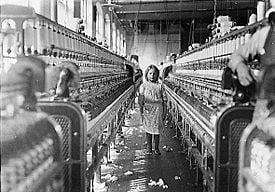
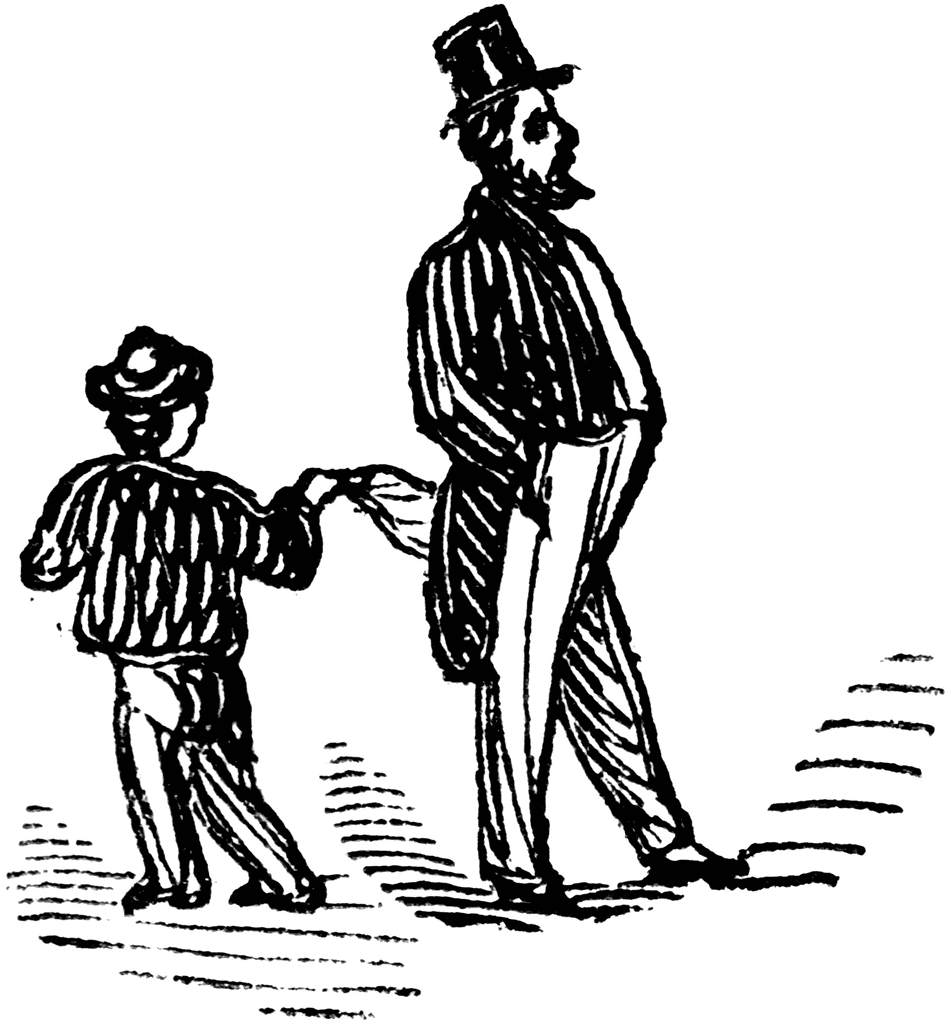
At first, childhood was like the picture above. Children dressed like adults, worked like adults, and faced the consequences of adulthood. Back in the middle ages, you could be hanged for theivery at the ripe old age of seven (Oh, but surely they never enforced that. All children were angels back in the day). Toddlers drank weak bear because the water wasn't clean. Girls were married in their teens. And of course, there was also time for play.                                                                           
Time passed. Generations rose and fell. Then came the Revolution. The Industrial one. Families moved from farms to cities. Kids still worked, but now there were factories.
14 hour days? Typical. Street orphans? Common as gutter trash. Many of them resorted to crime to make a living. Yes, they had seven year old thieves back then too.
Then came the reformers. Some were young strikers. Others men like Lewis Hine, who went undercover to take those two factory photos. "That's right, Mr. Factory Owner sir. I'm here to photograph the machinery. Now stand that little girl up against that big hulk of metal over there so they can tell how big it is."
And a lot of them were women-usually rich women-with their newfangled notions. Like females voting. They also pushed for the child's right to a childhood. The right to not work 14 hours in a dusty, smoky factory. The right to a proper home. The right to safety. The right to an education.
After a while, their ideas started to catch on. Child labor laws were passed and virtually ignored until the Great Depression when the adults really needed the jobs.
Children began to be protected. Sheltered. Pampered. And somewhere along the line, society forgot that a seven year old used to be old enough for the fields and factories and gallows. Now that's responsibility. They abided to the new rules until the world became the way it is today.
Children under twelve have their own menus in restaurants. That way they won't have to eat grown-up food. And when they're done with those chicken nuggets, they can play in the restaurant's play area. So long as they play the right way. No scaling the outside of the slide.

Forget rag dolls and sticks to amuse them. They can have toys, hundreds of them!
And they can sit in front of the TV to watch educational television. Preschool just isn't hardcore enough. They need to be studying the alphabet, the shapes, the colors, basic science, and a few random words in foreign languages during every spare moment.
Eventually, they'll realize these shows are pretty stupid and preachy. They'll graduate to sitcoms directed at tweens, always with a moral following the zany scheme. Don't sneak out of the house in the middle of the night and go to a party. Don't lie to your friends. Don't cheat on a test. Don't fall for the wrong guy.
And thank you, beloved sponsors, for allowing us to broadcast these delightful shows in sixteen different languages! Now buy their products. And while you're buying those, buy our stuff too!
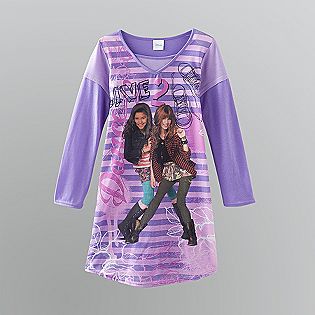
Fellow 14-year-olds on a shirt
Carry a backpack with the name of a school you've never seen and students who don't exist.

Play and education are both such crucial things, why not smush them together? Have babies shove green square pegs into green square holes. If you're putting together an animal puzzle, have the animals hold up cards with the letters of the alphabet.
And then if they really can't think of a way to attach it to the stuff you learn in elementary school, they'll throw out the mental terms just to remind you how important development is.
Sharing practice! Reasoning skills! Problem solving! Social language! Self esteem! Overall growth and development! Don't let today's generation become disadvantaged in the global economy!
Seriously. I have seen that last one used.
So, has the world grown to cater to children? They do get specialized food, clothes, and media. 
But no voice. 
There's an old saying some people still use-"Hire a young carpenter but an old physician." That pretty much sums up how people looked at youth centuries ago. Not the wisest they'll ever be, but strong and hardy, perfect for manual labor. Instead of miniature adults, children are now supposed to be unformed adults. Undeveloped. Immature. Irresponsible. Everything positive with a negative prefix shoved onto the front. 
The toys and menus are outgrown. But even as teenagers, we're classified as "young". Vulnerable. Defiant. At risk, every one of us, because this gritty world is so different from the one our ancestors grew up in. 
Next time you're about to launch into that same tired rant about the imperfections of teenagers these days, stop. Think. Is the world really better? Different, yes, but better? In what way?
What did you do as a teenager? Would you like to go back?
 
"Just look around at the world we're inheriting
And think of the one we'll create."
-Newsies, Broadway version

Wednesday, September 5, 2012

More Movies

Young adult literature has come a long way. Teen music, on the other hand, has started to diminish. Justin Bieber and anybody from Disney have fans more in their tweens. We're right in the middle, so we just listen to whatever we want. The same goes for TV shows, only not as many people can tolerate cheesy Disney Channel shows past the age of thirteen. The internet is anybody's game.
What's left? Movies. I cannot not name a single good movie written for teenagers. I think I can sum them all up for you. Let's see...Outcast Kid lives life at the bottom of the high school popularity ladder with a small but loyal group of friends. Two of them, usually. Outcast is constantly bullies by Jock (if male) or School Diva (if female). They quietly crush on Jock (if female) or School Diva (if male) but don't dare talk to said crush because he/she is dating a horribly wrong, horribly attractive person.
Bells ring exactly when you need them to, cafeteria lunch consists largely of mystery meat, and everybody has enough time in between class to act out entire scenes in front of the lockers.
With a sudden twist of fate, Outcast is propeled to the top of the food chain and gets their dream date. Not surprisingly, Jock or Diva turns out to be a jerk. Outcast realizes they were actually in love with their best friend all along and everything works out perfectly by prom.
How did I do?
Sadly, most teen movies are horrible. Book adaptions are exceptions. But even those tend to fail miserably.


But not all of them do. Some become cult classics and you either love or hate.


Let's face it. Young adult literature isn't strictly for teenagers. Adults saw those too.
So what do we watch? Lots of kids movies. Many of these are adaptions as well.


And then the normal, adult movies.


What do you see here? More adaptions. Is anybody original? Yes, Disney, I'm looking at you.
Come to think of it, all superhero movies are based off other superhero movies, which were based on comics. And who were the comic books written for? Kids. Of course, nobody reads those now. Just graphic novels and manga.
And then all big movies are rated PG-13 or R, so younger, Batman adoring audiences can't see them. Adults seem to have forgotten what it's like to be too young for a movie. You think they'd make things kid enjoy, like Spiderman, into movies they're allowed to watch.
And who picked 13 and 17 for the cutoff dates? I've looked over rating systems used around the world. 12 and 16 are popular numbers. At least America's system isn't complicated. Some countries have up to four different classifications between 10 to 18. Most countries, including America, are supposed to check for identification. But I've never had to that for a PG-13 movie, even though I've always looked three years younger than my actual age and I usually go to movies with friends a grade or two below me.
Some so called "teen movies" have no teenagers at all. Jennifer Lawrence is 21, five years older than Katniss. But Suzanne Collins selected her so I have no problem with that. Robert Pattison is 26, which is actually young for Edward's 107. But then we have actors like Cory Monteith from Glee, age 30. Jason Earles from Hannah Montana played Jackson while he was 34. That's old enough to have your own teenagers. Grow up already.
With stuff like this made for us, is it any wonder we stick to the "normal" movies?